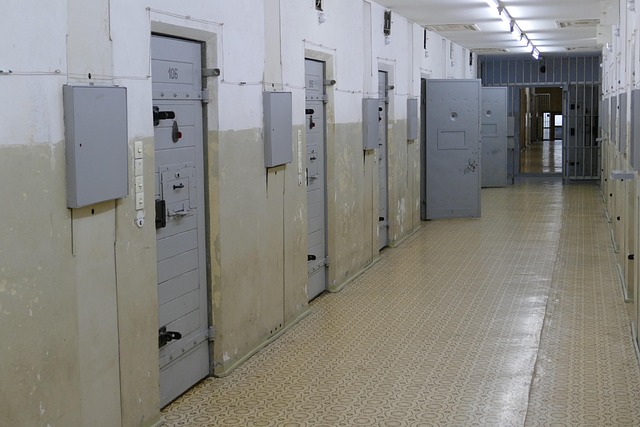
67th Precinct, East Flatbush: a 54-year-old man held after a Friday night arrest fell ill in custody and died at Kings County Hospital
BROOKLYN, NEW YORK (October 4, 2026): Reginald Newkirk, 54, of Brooklyn, died early Sunday, October 4, after a medical emergency while he was in the custody of the New York Police Department, according to the NYPD, as reported by Gothamist and amNY. He was pronounced dead at Kings County Hospital at 5 a.m., Gothamist reported, citing police.
Police said Newkirk was arrested just before 9 p.m. on Friday, October 2. At about 6:45 a.m. Saturday, according to the NYPD account reported by Gothamist, he began showing symptoms of withdrawal and was taken to SUNY Downstate hospital, which released him after a couple of hours. He was brought back to the 67th Precinct station house in East Flatbush at 11 a.m.
At about 2:10 p.m. Saturday, police requested EMS for a “sick” prisoner, Gothamist reported; amNY said paramedics were called just after 2 p.m. Newkirk was taken to Kings County Hospital, where he died the next morning. Reports differ on whether he had been arraigned: amNY said he had been awaiting arraignment, while Gothamist said that was not clear.
The NYPD’s Force Investigation Division is investigating. The cause of death has not been released. Gothamist reported that Newkirk is at least the sixth person this year to die after a medical emergency in NYPD custody.
Liability for the Brooklyn In-Custody Death
Under 42 U.S.C. § 1983, families can bring federal civil rights claims when government officials violate a person’s constitutional rights. In Estelle v. Gamble (1976), the U.S. Supreme Court held that deliberate indifference to a serious medical need violates the Constitution. People who have been arrested but not convicted are generally protected under the Fourteenth Amendment’s due process clause, and courts look at whether officials knew of a serious medical need and failed to respond reasonably. Based on what the NYPD has released, the questions include:
- Withdrawal symptoms: Police said Newkirk showed symptoms of withdrawal on Saturday morning. Whether his condition was tracked and treated once he was back at the precinct will be a central question.
- The hospital release: SUNY Downstate released him after a couple of hours. Any discharge instructions, and whether officers received and followed them, are typically reviewed.
- The hours at the precinct: Newkirk returned at 11 a.m., and police requested EMS at about 2:10 p.m. Cell logs and station house video can show how he was checked during that time.
- Time before the EMS call: Investigators will look at when officers first noticed he was sick and how quickly they called for medical help after that.
Federal civil rights claims can be brought against individual officers and, in some cases, against the city when a policy, custom or failure to train contributed to a death. Families may also have state law wrongful death claims. These civil claims are separate from the Force Investigation Division’s review and from any decision about discipline or charges.
Steps to Take After a Brooklyn In-Custody Death
Deaths in police custody are reported to the federal government under the Death in Custody Reporting Act. The records that usually matter most to a family, however, are held by the police department and local hospitals, and some video systems overwrite footage automatically.
- Send a preservation letter: Ask in writing that the NYPD keep station house video, cell check logs, body camera footage and prisoner movement records from the 67th Precinct.
- Request hospital records: The family’s legal representative can request records from both SUNY Downstate and Kings County Hospital, including discharge papers.
- Ask for the autopsy: Ask the New York City medical examiner’s office how and when the autopsy and toxicology results will be shared with the family.
- Keep a timeline: Write down every call, message or update the family received from police or hospitals, with the date and time.
Federal civil rights claims generally borrow the personal injury deadline of the state where the death happened, which in New York is generally three years. State law claims against New York City generally require a notice of claim within 90 days under General Municipal Law § 50-e, so that deadline can arrive much sooner. Contact an attorney promptly to protect your rights.
Investigating the Brooklyn In-Custody Death
We at Carrazco Law, A.P.C. extend our deepest condolences to the family and friends of Reginald Newkirk. Important questions remain: How was he monitored at the 67th Precinct after he returned from the hospital? And what will the medical examiner find about the cause of his death?
If a loved one died or was seriously injured while in custody, our civil rights attorneys can help you understand your rights under federal civil rights law. Call us anytime at (800) 541-3244. Se Habla Español. Free consultation.

Carrazco Law, A.P.C. is based in California. Its attorneys are licensed in California; representation in a federal court outside California depends on that court’s admission rules and may involve associating with local counsel.
Published on October 8, 2026 by M.M., Carrazco Law, A.P.C. The incident described in this article occurred on October 4, 2026.