A Guide for Families After a Death in a California Jail, Prison or Police Lockup
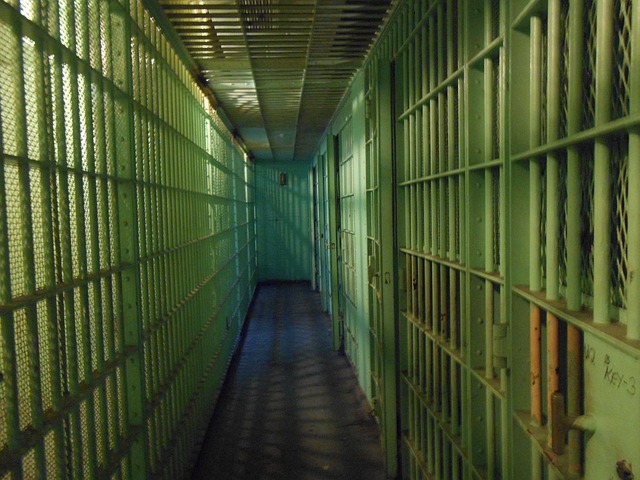
When a family member dies in a California jail, prison or police lockup, relatives often learn about it days later, from a short phone call or a news release. This guide explains, in general terms, who investigates a death in custody in California, which records a family can request, which state and federal laws apply, and the deadlines that can close the door to a claim. It is general information about the law, not legal advice about any particular case.
About this guide: This article is for general informational purposes only. It was prepared from research of official sources, including the published text of California and federal laws, court decisions and government data, all listed at the end. It is not legal advice, it does not address any specific case, and reading it does not create an attorney-client relationship. Laws change and every situation is different; for advice about a specific situation, consult a licensed attorney.
Deaths in custody are not rare. The U.S. Bureau of Justice Statistics (BJS) counted 1,200 deaths in local jails nationwide in 2019, and 184 of them were due to drug or alcohol intoxication, the highest number in the 20 years BJS had collected that data (BJS, Mortality in Local Jails, 2000 to 2019). From 2008 to 2018, about half of all deaths in local jails were due to illnesses such as heart disease, liver disease and cancer (BJS, Mortality in Local Jails, 2000 to 2018). For a family, that means the medical care a person received, or did not receive, is often at the center of what happened.
Who Investigates a Death in Custody in California
Several public agencies have a role after a death in custody. Knowing who they are helps a family know whom to call and which records exist.
- The coroner or medical examiner: Under Government Code § 27491, the county coroner must inquire into and determine the circumstances, manner and cause of violent, sudden or unusual deaths, and of deaths in prison or while under sentence. The coroner assigns a case number and performs or orders the autopsy.
- The California Attorney General: Under Government Code § 12525, the law enforcement agency or the agency in charge of the jail or prison must report the death in writing to the Attorney General, and must update the report when new information becomes available, including the manner and means of death. The law states that these reports are public records.
- The agency that held the person: Sheriffs, police departments and the California Department of Corrections and Rehabilitation (CDCR) usually open their own internal review. Their findings are about policy and procedure, not about civil liability.
- The district attorney: In some counties the district attorney reviews in-custody deaths for possible criminal conduct. In our reporting on the Theo Lacy Facility, for example, the Orange County Sheriff’s Department said the Orange County District Attorney’s Office would investigate.
Records and Information a Family Can Request
Families can generally ask for information in writing, and it is wise to keep a copy of every request and every answer. These California laws give families specific tools:
- A second autopsy: Under Government Code § 27520, the surviving spouse, or if there is none, a surviving child or parent, or if there are none, the next of kin, may request an autopsy in writing. If one has already been performed, the coroner may perform another at the family’s written request. The person who requests it generally pays for it.
- The Attorney General report: Because Government Code § 12525 makes the agency’s written report a public record, a family can generally request it under the California Public Records Act. Confidential medical information is protected by separate rules.
- Use of force records: When the use of force by a peace officer or custodial officer resulted in death or great bodily injury, Penal Code § 832.7 generally makes the records of the report, investigation or findings available for public inspection.
- Video of a critical incident: Under Government Code § 7923.625, video or audio of an incident in which an officer fired at a person, or in which force by a peace officer or custodial officer resulted in death or great bodily injury, may generally be withheld during an active investigation only for a limited time and under limited exceptions set by that law. Deaths from illness without use of force are not covered by this rule.
The Legal Standards: State and Federal Law
Two bodies of law usually apply to a death in custody in California, and they ask different questions.
- California law on medical care: Under Government Code § 845.6, a public employee, and the public entity that employs them, can generally be liable if the employee knows or has reason to know that a person in custody needs immediate medical care and fails to take reasonable action to summon that care.
- Federal civil rights law: Under 42 U.S.C. § 1983, a person, or the family of a person who died, can bring a claim against officials who, acting under state authority, violated rights protected by the Constitution.
- People serving a sentence: The U.S. Supreme Court held in Estelle v. Gamble (1976) that deliberate indifference to the serious medical needs of prisoners violates the Eighth Amendment, and in Farmer v. Brennan (1994) it explained when prison officials are liable for disregarding a substantial risk of serious harm.
- People held before trial: Many people in county jails are awaiting trial and have not been convicted. For them, the Ninth Circuit held in Gordon v. County of Orange, 888 F.3d 1118 (9th Cir. 2018), a case about a man who died in the Orange County Central Men’s Jail, that medical care claims are judged under an objective deliberate indifference standard. For force used against a pretrial detainee, the Supreme Court held in Kingsley v. Hendrickson (2015) that the question is whether the force was objectively unreasonable.
A county or city can also be held responsible under federal law when a policy or custom caused the violation, as the Supreme Court explained in Monell v. Department of Social Services (1978). Whether any of these standards is met depends entirely on the facts of each case.
Who Can Bring a Claim
California law identifies who may act after a death. Under Code of Civil Procedure § 377.60, a wrongful death claim may generally be brought by the surviving spouse, domestic partner and children of the person who died or, if there are no surviving children or their descendants, by the persons who would inherit by intestate succession, such as parents. Certain dependents may also qualify. Separately, under Code of Civil Procedure § 377.30, claims that belonged to the person who died pass to the personal representative of the estate or, if there is none, to the successor in interest.
Why Acting Promptly Matters
Claims after a death in custody, whether under California law or federal civil rights law, are subject to legal deadlines and procedural requirements, including special requirements for claims against public agencies. Those deadlines depend on the facts of each case, the agencies involved and the type of claim, and some of them are short. Evidence such as video and housing logs can also be overwritten or lost over time. For these reasons, families should contact an attorney as soon as possible to protect their rights.
First Steps for the Family
- Get the coroner case number: Call the coroner or medical examiner of the county where the person died and ask for the case number and the status of the autopsy and toxicology tests.
- Write down the timeline: Note the last calls, visits, letters or messages, especially any in which your loved one said they felt sick, were hurt or were afraid, with dates and times.
- Ask in writing that evidence be preserved: Jail video, housing logs, safety check records and medical records can be overwritten or archived. A written preservation request sent early helps protect them.
- Request records in writing: Ask the agency and the coroner for the records listed above, and keep copies of every request, every response and every envelope.
- Keep official documents together: Keep the death certificate, any letters from the agency or the coroner, and any property or receipts returned to the family.
In-Custody Deaths We Have Reported
Carrazco Law, A.P.C. reports on in-custody deaths in California as they are announced, using official statements and established news organizations. Recent reports include:
- Scott Theodore Remick, Theo Lacy Facility, Orange
- Vinh Quang Nguyen, Anaheim Police Department jail
- Daniel Patrick Murphy, San Diego Central Jail
- James Edward Murphy, Northern Branch Jail, Santa Maria
- Kristina Michelle Riley, Lerdo Pre-Trial Facility, Kern County
Laws, Cases and Data Cited in This Guide
California: Government Code §§ 845.6, 7923.625, 12525, 27491 and 27520; Code of Civil Procedure §§ 377.30 and 377.60; Penal Code § 832.7 (official text at leginfo.legislature.ca.gov). Federal: 42 U.S.C. § 1983; Estelle v. Gamble, 429 U.S. 97 (1976); Monell v. Department of Social Services, 436 U.S. 658 (1978); Farmer v. Brennan, 511 U.S. 825 (1994); Kingsley v. Hendrickson, 576 U.S. 389 (2015); Gordon v. County of Orange, 888 F.3d 1118 (9th Cir. 2018). Data: U.S. Bureau of Justice Statistics, Mortality in Local Jails, 2000 to 2018 and 2000 to 2019, Statistical Tables. Laws change; this guide reflects the official text as of October 2026.
We at Carrazco Law, A.P.C., a personal injury and civil rights law firm in Irvine, California, prepared this guide for families who are facing the loss of a loved one in custody and need clear, verified information about what comes next.
If a loved one died or was seriously injured while in custody anywhere in California, our civil rights attorneys can help you understand your rights and legal options. Call us anytime at (800) 541-3244. Se Habla Español. Free consultation.

Published on October 21, 2026 by M.M., Carrazco Law, A.P.C. Last reviewed on October 21, 2026.